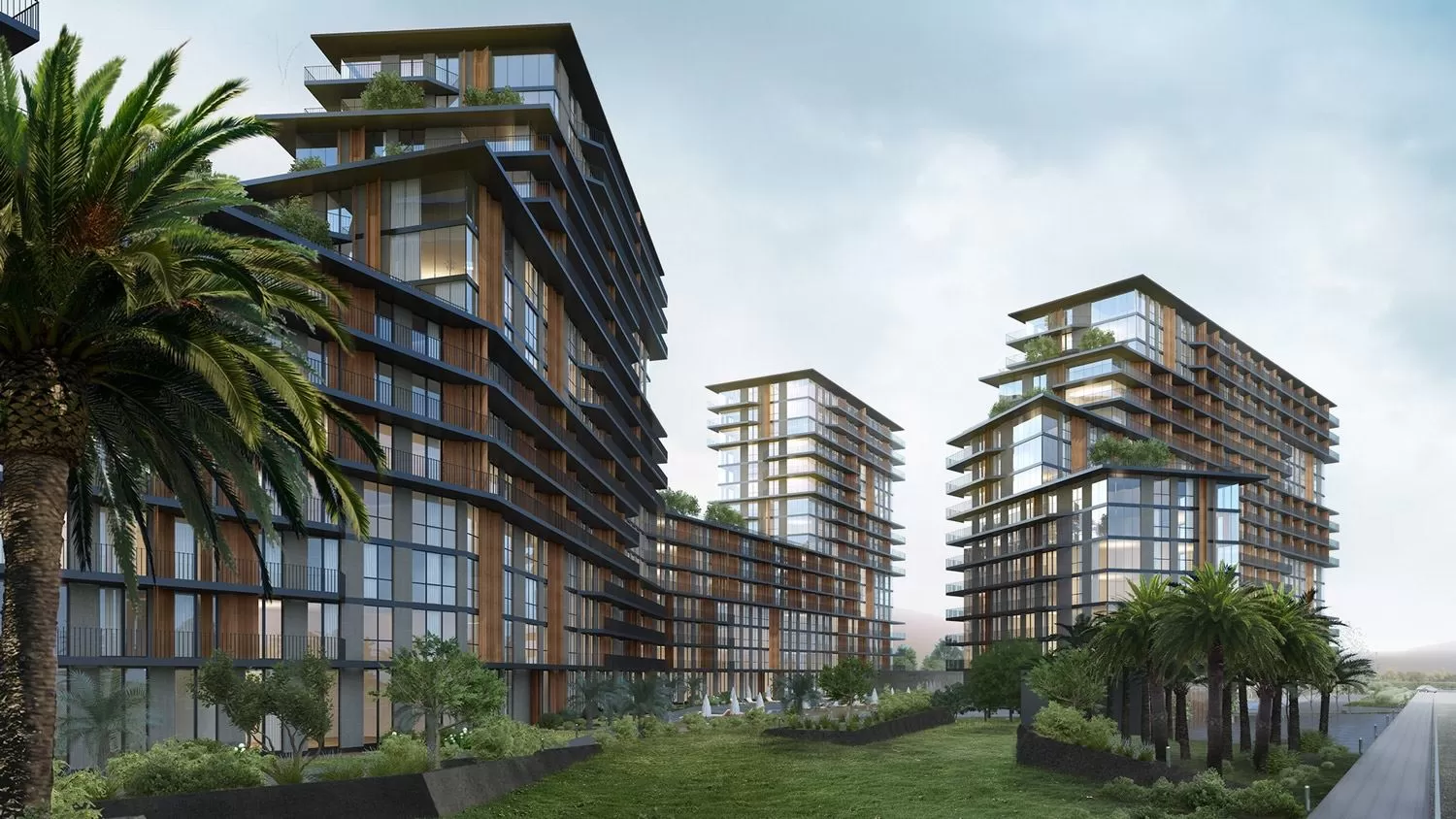
A ventilated facade manages moisture and thermal performance in the building envelope while giving compact panels aesthetic freedom. We cover the technical reasons it is favoured in public and residential projects, and the role of the compact panel in that equation.
What is a ventilated facade, and why is it rising?
The air gap left between the sub-structure and the outer panel drains moisture and aids thermal performance. This “rainscreen” logic reduces condensation, keeps the panel back dry and contributes to building life. Easy maintenance and longevity make it a favourite in public projects.
The role of the compact exterior panel
The exterior-grade compact panel (G-EXT) is used in ventilated facades and balcony cladding thanks to UV and weather resistance, fire behaviour and a wide decor range. Its non-porous, dimensionally stable body suits the demanding conditions of the outdoors (EN 438-6 references).
Technical characteristics
| Property | Typical range / quality |
|---|
| Thickness | 4–20 mm |
|---|
| Standard | EN 438-6 (exterior compact) |
|---|
| Surface | UV-resistant, preserves colour fastness |
|---|
| Fire | Flame-retardant options |
|---|
| Application | Ventilated facade, balcony, railing |
|---|
Applications
- Residential and office-building facades
- School, campus and hospital projects
- High-traffic areas such as stadiums, airports and terminals
- Balconies, railings and exterior details
Maintenance and longevity
Because the non-porous surface won’t hold dirt, maintenance is easy; in most cases water and a mild detergent are enough. The surface resists outdoor conditions and many cleaners.
Market and smart-facade trends
In ventilated facades, the trend is not only new decor. Project teams want faster installation, lower maintenance, better moisture management and clearer technical/fire documentation. HPL/compact panels are often considered here because they are relatively light, decor-flexible and compatible with sub-frame systems. Smart facades, integrated PV, factory-finished large-format panels and low-maintenance surface treatments are also worth watching.
Critical installation details
- Air cavity: continuous air movement behind the panel should be maintained; bottom and top ventilation must not be blocked.
- Joint spacing: leave joints according to manufacturer guidance so panels can move.
- Sub-frame: aluminium/steel carriers should be calculated according to wind load and panel size.
- Fixed and sliding points: fixing holes must not lock the panel against thermal movement.
- Fire stops: cavity fire barriers in multi-storey buildings must follow project regulations.
Design notes for architects
Exterior compact panels allow a broad decor language, from solid colours to wood and stone effects. But good facade design is not only pattern selection. Panel module, joint lines, corners, window reveals, sun exposure, colour fastness and maintenance access should be considered together from the start. Good modular planning reduces waste and installation time.
What should be in the procurement file?
When requesting facade-panel quotations, ask for the product datasheet, exterior suitability, fire classification, UV/colour-fastness data, installation guide, sub-frame principle and project references if available. This lets teams compare system performance, not only square-metre price.
For technical data and decor options see our G-EXT Exterior page; for made-to-measure sizing see our CNC services.
Sources
#exterior facade
#ventilated facade
#G-EXT
#compact panel
#EN 438-6
#rainscreen
 Plate & Panel Products
Manufacturer
Plate & Panel Products
Manufacturer

 ®
®