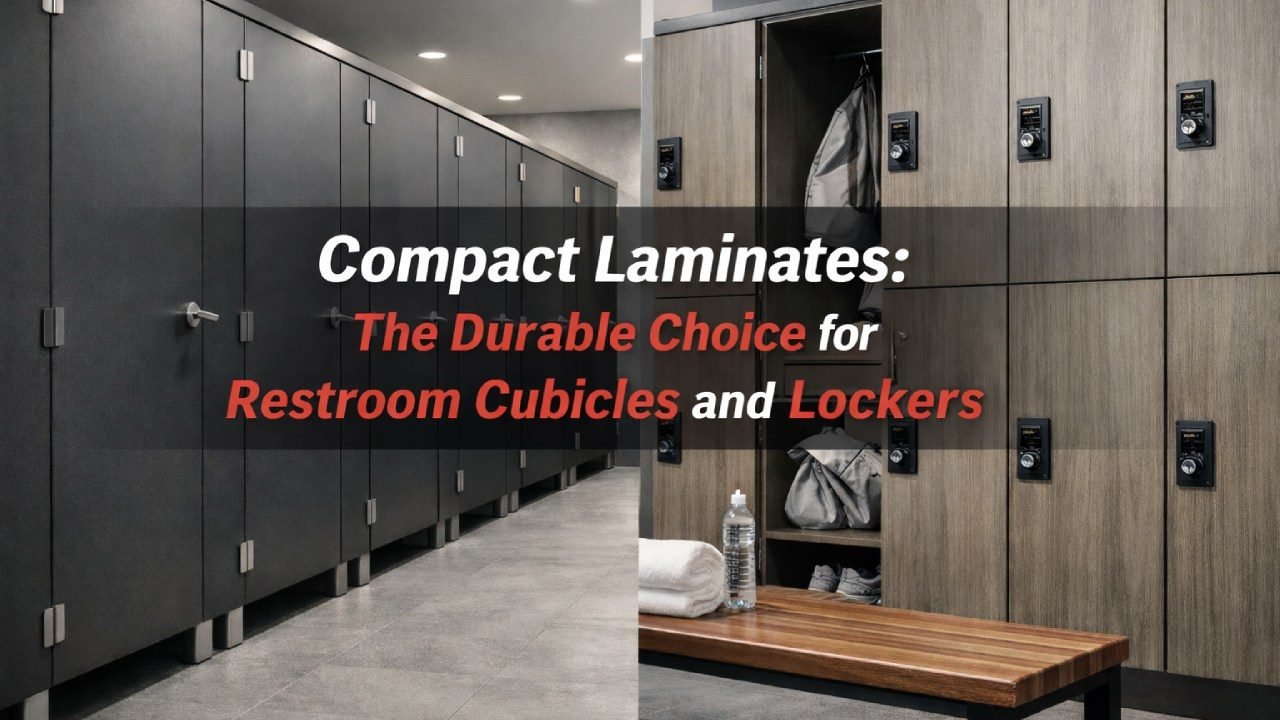
WC cubicles work in one of the hardest-used parts of a building. Moisture, cleaning chemicals, impact, privacy and accessory durability must be considered together. Material selection should not be based only on colour or price.
HPL vs compact laminate
Standard HPL is usually a thin decorative surface bonded to a substrate. Compact laminate is a dense, self-supporting phenolic panel with much higher resistance to water and heavy use. For wet and high-traffic environments, compact laminate is usually the safer option.
Accessories matter
A strong panel will not perform well with weak accessories. Hinges, locks, legs, profiles and connectors should suit humid environments; stainless steel or anodised aluminium are common choices. Floor slope, leg height, door gaps and wall fixing must be planned correctly.
See WC compact cubicle systems and compact accessories.
Sources
#compact WC cubicle
#compact laminate cubicle
#toilet cubicle
#phenolic panel
#wet area
#vandal resistance
 Plate & Panel Products
Manufacturer
Plate & Panel Products
Manufacturer

 ®
®